When most travelers visit Jaipur, they usually head straight to Amber Fort, Hawa Mahal, or City Palace. However, hidden in the historic lanes of Amer is a unique cultural gem that celebrates one of Rajasthan’s most famous art forms—hand block printing. The Anokhi Museum is not just a museum; it is a journey into the world of traditional textiles, skilled craftsmanship, and centuries-old printing techniques.
If you love art, fashion, history, or local culture, the Anokhi Museum in Amer is a fascinating place that offers a different side of Jaipur beyond its forts and palaces.
History and Importance of Anokhi Museum
The Anokhi Museum of Hand Printing was established to preserve and promote the traditional art of hand block printing, a craft that has been practiced in Rajasthan for generations.
The museum is housed in a beautifully restored haveli known as the Chanwar Palkiwalon Ki Haveli in Amer. The restoration itself is considered an excellent example of heritage conservation.
Founded by the creators of the famous Anokhi textile brand, the museum aims to educate visitors about the history, techniques, tools, and artisans involved in hand block printing. It plays an important role in preserving Rajasthan’s textile heritage and supporting traditional craftsmanship.
Today, it is one of Jaipur’s most unique museums and attracts tourists, designers, students, and textile enthusiasts from around the world.
Location and Address
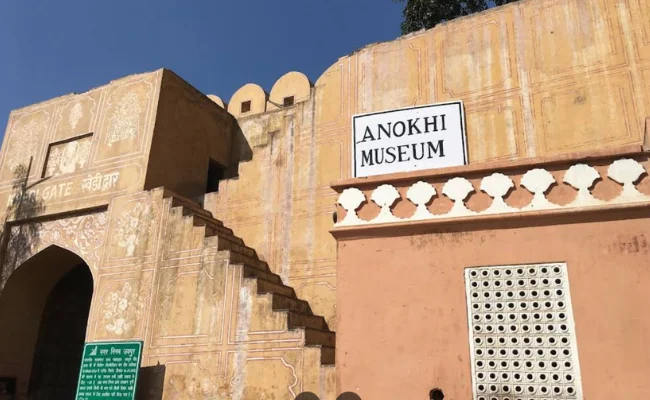
Address:
Anokhi Museum of Hand Printing, Chanwar Palkiwalon Ki Haveli, Kheri Gate, Amer, Jaipur, Rajasthan 302028, India.
The museum is located in the historic town of Amer, very close to the famous Amber Fort.
How to Reach Anokhi Museum
By Air
The nearest airport is Jaipur International Airport, located approximately 25 km from the museum. Taxis and app-based cabs are easily available.
By Train
Jaipur Junction Railway Station is around 13 km away and offers excellent connectivity with major Indian cities.
By Road
Amer is well connected by road to all parts of Jaipur. Visitors can use:
- Local buses
- Auto-rickshaws
- Taxis
- App-based cab services
- Private vehicles
Nearest Metro Station
The nearest metro station is Badi Chaupar Metro Station, which is approximately 8–9 km from the museum.
From the metro station, visitors can hire an auto-rickshaw, taxi, or local transport to reach Amer.
Google Maps Location
Anokhi Museum Timings
The museum generally operates according to the following schedule:
| Day | Timing |
| Tuesday to Saturday | 10:30 AM – 5:00 PM |
| Sunday | 11:00 AM – 4:30 PM |
| Monday | Closed |
Visitors should verify the latest timing before planning their visit.
Anokhi Museum Ticket Price
The museum charges a modest entry fee.
Approximate Ticket Price
| Category | Ticket Price |
| Indian Adults | ₹80 – ₹100 |
| Students | Discounted rates available |
| Foreign Tourists | Higher charges may apply |
| Camera Charges | Additional charges may apply |
Ticket prices may change periodically.
What to See Inside the Museum
The museum offers a rich collection of exhibits related to textile printing and traditional crafts.
Hand Block Printing Demonstrations
One of the biggest attractions is the live demonstration where skilled artisans show how wooden blocks are used to create beautiful fabric designs.
Traditional Wooden Printing Blocks
Visitors can explore a large collection of intricately carved wooden printing blocks used for centuries.
Textile Galleries
The galleries display hand-printed fabrics, garments, scarves, and decorative textiles from different regions of Rajasthan.
Natural Dye Exhibits
Learn how traditional artisans create colors using natural ingredients such as plants, flowers, roots, and minerals.
Printing Techniques
The museum explains various printing methods including:
- Direct printing
- Resist printing
- Mud printing
- Indigo dyeing
Historic Photographs and Tools
Old photographs, printing tools, and artisan equipment provide insights into the evolution of textile printing.
Heritage Architecture
The restored haveli itself is a major attraction, featuring beautiful courtyards, traditional architecture, and elegant stonework.
Visitor Experience
Most visitors describe the museum as educational, inspiring, and visually appealing.
Unlike large historical museums, Anokhi Museum offers a more interactive experience. Watching artisans work, learning about textile production, and exploring the beautifully restored building creates a memorable visit.
Many visitors appreciate the peaceful atmosphere and the opportunity to understand a traditional craft that continues to thrive in Rajasthan.
Facilities Available
The museum offers several visitor-friendly facilities:
- Clean washrooms
- Drinking water
- Gift shop
- Information displays
- Guided tours
- Demonstration areas
- Seating spaces
- Photography opportunities
- Souvenir store featuring hand-printed products
Best Time to Visit Anokhi Museum
The best time to visit is from October to March.
Jaipur’s weather remains pleasant during these months, making it comfortable to explore Amer and nearby attractions.
Seasonal Guide
Winter (October to March)
- Pleasant weather
- Ideal sightseeing conditions
- Best photography opportunities
Summer (April to June)
- Very hot temperatures
- Morning visits recommended
Monsoon (July to September)
- Less crowded
- Pleasant surroundings after rainfall
Travel Tips for Visitors
- Combine your visit with Amber Fort.
- Arrive early to avoid crowds.
- Allocate at least 1–2 hours for exploration.
- Carry a camera for photography.
- Wear comfortable walking shoes.
- Attend the live printing demonstrations.
- Visit the museum shop for authentic hand-printed souvenirs.
Nearby Places to Visit
Amber Fort
Jaipur’s most famous fort and a UNESCO World Heritage attraction.
Panna Meena Ka Kund
A beautiful historic stepwell known for its symmetrical architecture.
Jagat Shiromani Temple
A historic temple famous for its intricate carvings.
Jaigarh Fort
Known for housing the world’s largest cannon on wheels.
Nahargarh Fort
Offers spectacular views of Jaipur city.
City Palace Jaipur
One of Rajasthan’s most important royal landmarks.
Pros and Cons
Pros
- Unique focus on traditional hand printing
- Interactive demonstrations
- Affordable ticket price
- Beautiful heritage architecture
- Educational experience
- Suitable for families, students, and designers
Cons
- Smaller than major museums in Jaipur
- Limited parking space in peak season
- Requires some walking through Amer’s narrow lanes
- Closed on Mondays
Frequently Asked Questions (FAQs)
What is the timing of Anokhi Museum?
The museum is generally open from 10:30 AM to 5:00 PM from Tuesday to Saturday and 11:00 AM to 4:30 PM on Sundays.
What is the ticket price of Anokhi Museum?
The ticket price is usually around ₹80–₹100 for Indian visitors, though rates may vary.
What is the nearest metro station?
The nearest metro station is Badi Chaupar Metro Station, located approximately 8–9 km away.
How much time is needed to explore the museum?
Most visitors spend around 1 to 2 hours exploring the exhibits and demonstrations.
Is photography allowed?
Photography may be allowed in certain areas. Visitors should check the latest rules at the entrance.
What is the best time to visit Anokhi Museum?
The best time to visit is from October to March when Jaipur experiences pleasant weather.
Is the museum suitable for children?
Yes. Children can enjoy the live printing demonstrations and learn about traditional crafts in an engaging way.
Conclusion
The Anokhi Museum in Amer, Jaipur, is one of Rajasthan’s most unique cultural attractions. Unlike traditional museums that focus on royal history alone, it celebrates the living heritage of hand block printing and textile craftsmanship. With its fascinating exhibits, live demonstrations, beautiful haveli architecture, and affordable ticket price, the museum offers an enriching experience for travelers of all ages. Whether you are a culture enthusiast, fashion lover, student, or tourist exploring Jaipur, the Anokhi Museum deserves a place on your itinerary.