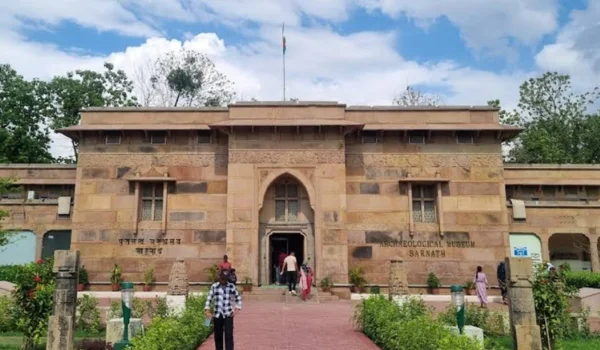
The Sarnath Museum is one of the most important archaeological museums in India. Located near the holy town of Varanasi, this museum is closely connected with the life and teachings of Gautama Buddha.
Sarnath is the place where Buddha gave his first sermon after attaining enlightenment, making it a very sacred destination for Buddhists. The museum helps visitors understand this rich spiritual and historical background in a simple way.
History & Importance
Sarnath Museum was established in 1910 by the Archaeological Survey of India.
It is important because:
- It houses original artifacts found at the Sarnath excavation site
- It preserves relics related to Buddhism and Emperor Ashoka
- It displays the famous Ashoka Lion Capital, India’s national emblem
The museum plays a key role in protecting and showcasing India’s ancient heritage.
Location & Address
- Address: Museum, 9918, Sarnath, Varanasi, Uttar Pradesh 221007
- Located near Dhamek Stupa and other Buddhist sites
Google Maps Location
How to Reach
By Train
- Nearest railway station: Varanasi Junction (around 10 km away)
By Air
- Nearest airport: Lal Bahadur Shastri International Airport (about 25 km)
By Road
- Easily accessible by auto, taxi, and buses from Varanasi
Nearest Metro
There is currently no metro connectivity in Varanasi, so there is no nearest metro available.
Timing
- Opening Days: Tuesday to Sunday
- Timing: 9:00 AM to 5:00 PM
- Closed on Mondays
Morning visits are best for a peaceful experience.
Ticket Price
- Indians: ₹20 (approx.)
- Foreign tourists: ₹100 (approx.)
- Children below a certain age: Free
The ticket price is affordable and worth the historical experience.
What to See Inside
Ashoka Lion Capital
- The original national emblem of India
- One of the most important exhibits in the museum
Buddha Sculptures
- Beautiful stone statues of Buddha in different poses
- Gupta period art known for its elegance
Ancient Relics
- Pottery, inscriptions, and archaeological findings
- Remains from monasteries and stupas
Buddhist Artifacts
- Items related to early Buddhist culture
- Carvings and panels depicting Buddha’s life
Visitor Experience
Visitors often describe the museum as:
- Peaceful and spiritual
- Rich in history and culture
- Perfect for learning about Buddhism
It is well-maintained and not too crowded, allowing a calm visit.
Facilities Available
- Clean washrooms
- Drinking water
- Parking facility
- Security and information boards
Best Time to Visit
The best time to visit is:
- October to March (pleasant weather)
Avoid peak summer afternoons due to heat.
Travel Tips
- Combine museum visit with nearby Sarnath attractions
- Spend around 1–2 hours inside
- Maintain silence and respect the spiritual environment
- Carry water and wear comfortable footwear
Nearby Places to Visit
- Dhamek Stupa – important Buddhist site
- Chaukhandi Stupa – historic stupa
- Mulagandha Kuti Vihar – beautiful Buddhist temple
Pros & Cons
Pros
- Rich historical and spiritual importance
- Affordable ticket price
- Well-maintained and peaceful
- Great for learning
Cons
- No metro connectivity
- Limited interactive displays
- Photography restrictions inside
FAQs
Q: What is the timing of Sarnath Museum?
A: The timing is 9:00 AM to 5:00 PM, Tuesday to Sunday.
Q: What is the ticket price?
A: The ticket price is around ₹20 for Indians.
Q: Is there any nearest metro?
A: No, there is no nearest metro in Varanasi.
Q: What is the best time to visit?
A: The best time to visit is from October to March.
Q: How much time is needed?
A: You can explore the museum in about 1–2 hours.
Final Thoughts
The Sarnath Museum is a must-visit for anyone interested in history, Buddhism, and Indian heritage. It offers a simple yet powerful journey into the past, helping visitors understand the significance of Sarnath in a meaningful way.
If you are visiting Varanasi, make sure to include this museum in your itinerary for a peaceful and enriching experience.