Every business needs to decide who its customers are. Some companies sell products or services directly to individual consumers, while others sell to other businesses. These two common approaches are known as B2B (Business-to-Business) and B2C (Business-to-Consumer) business models.
In India, both B2B and B2C markets are growing rapidly due to digital transformation, e-commerce growth, startups, and changing consumer behaviour. Understanding the difference between these models helps entrepreneurs choose the right strategy for starting or expanding a business.
Quick Comparison
| Feature | B2B Business Model | B2C Business Model |
| Full Form | Business to Business | Business to Consumer |
| Customers | Other companies | Individual customers |
| Sales Cycle | Longer | Shorter |
| Purchase Decision | Multiple people involved | Usually individual decision |
| Order Size | Larger | Smaller |
| Marketing Focus | Relationships & solutions | Brand & customer experience |
| Examples | Wholesale suppliers, SaaS companies | Retail stores, e-commerce |
What Is a B2B Business Model?
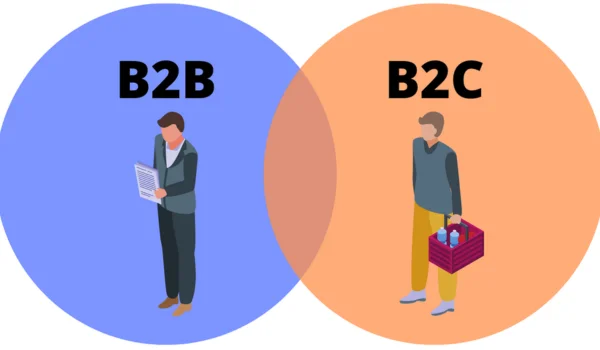
B2B (Business-to-Business) is a business model where one company sells products or services to another company.
In this model, customers are:
- Manufacturers
- Retailers
- Startups
- Corporates
- Government organizations
Examples of B2B Businesses in India:
- Raw material suppliers
- Software companies providing business tools
- Wholesale distributors
- Logistics companies
- Corporate consulting firms
Example:
A packaging manufacturer selling boxes to an e-commerce company is a B2B transaction.
What Is a B2C Business Model?
B2C (Business-to-Consumer) is a business model where companies sell directly to individual customers.
Customers purchase products or services for personal use.
Examples of B2C Businesses in India:
- Online shopping websites
- Clothing brands
- Restaurants
- Mobile apps
- Consumer electronics stores
Example:
A clothing brand selling shirts directly to customers through its website is a B2C business.
B2B vs B2C: Key Differences
- Target Customers
B2B
Businesses sell to other businesses.
Examples:
- Manufacturer → Distributor
- Software company → Corporate client
B2C
Businesses sell directly to consumers.
Examples:
- Brand → Customer
- Restaurant → Customer
Winner: Depends on market opportunity
- Buying Decision Process
B2B
B2B purchases usually involve:
- Managers
- Procurement teams
- Business owners
- Finance departments
Decisions are based on:
- Price
- Quality
- ROI
- Long-term benefits
B2C
Consumers usually decide based on:
- Price
- Brand image
- Reviews
- Convenience
- Personal preferences
- Sales Cycle
B2B
The sales process is usually longer.
Reasons:
- Negotiations
- Contracts
- Approvals
- Product demonstrations
Example:
A company buying enterprise software may take months to finalize a deal.
B2C
Sales happen faster.
Example:
A customer buying a smartphone online can complete the purchase within minutes.
- Order Value
B2B
Usually has higher order values.
Examples:
- Bulk product orders
- Annual software subscriptions
- Industrial equipment purchases
B2C
Usually has lower individual order values.
Examples:
- Clothes
- Food items
- Electronics
- Marketing Strategy
B2B Marketing
Focuses on:
- Relationship building
- Professional networking
- Industry events
- Email marketing
- Business demonstrations
Common channels:
- Trade exhibitions
- Direct sales
B2C Marketing
Focuses on:
- Brand awareness
- Customer emotions
- Discounts
- Social media marketing
Common channels:
- YouTube
- Search ads
- Influencer marketing
- Customer Relationship
B2B
Relationships are usually long-term.
Businesses focus on:
- Trust
- Reliability
- Service quality
- Partnerships
B2C
Relationships are often based on:
- Customer experience
- Brand loyalty
- Product satisfaction
Examples of B2B and B2C Businesses in India
| Industry | B2B Example | B2C Example |
| Food | Food supplier to restaurants | Restaurant selling meals |
| Technology | Software provider for companies | Mobile app for users |
| Fashion | Clothing manufacturer | Fashion brand selling online |
| Education | Corporate training provider | Online learning platform |
| Finance | Business loan provider | Personal loan provider |
| Retail | Wholesale distributor | Retail store |
Advantages of B2B Business Model
- Higher Revenue Per Customer
Businesses usually place larger orders.
- Long-Term Contracts
B2B relationships can create recurring income.
- Predictable Sales
Regular clients can provide stable revenue.
- Lower Customer Acquisition Frequency
You need fewer customers compared to B2C.
Challenges of B2B Business Model
- Longer sales process
- Requires strong relationships
- Fewer customers
- Complex negotiations
- Higher expectations
Advantages of B2C Business Model
- Faster Sales
Customers can purchase instantly.
- Large Market Size
Millions of consumers can be potential buyers.
- Easier Brand Building
Successful brands can grow quickly.
- Direct Customer Feedback
Businesses receive immediate responses.
Challenges of B2C Business Model
- High competition
- Higher marketing costs
- Customer loyalty challenges
- Price sensitivity
- Changing consumer trends
Which Business Model Is Better in India?
There is no single best model. The right choice depends on your industry, investment, and goals.
Choose B2B If:
✔ You want higher-value customers
✔ You prefer long-term contracts
✔ You can build business relationships
✔ Your product solves business problems
Examples:
- Manufacturing
- Software services
- Industrial supplies
- Consulting
Choose B2C If:
✔ You want direct customer interaction
✔ You can build a strong brand
✔ You have a consumer-focused product
✔ You want faster sales cycles
Examples:
- Retail
- Food business
- Fashion
- Consumer products
B2B vs B2C: Investment Comparison
| Factor | B2B | B2C |
| Initial Marketing | Moderate to High | High |
| Customer Acquisition | Relationship-based | Advertising-based |
| Sales Team | Often required | Optional |
| Inventory Need | Depends on business | Often required |
| Brand Building | Slower | Faster |
Emerging B2B Opportunities in India
Growing B2B sectors include:
- SaaS solutions
- Industrial supplies
- Logistics services
- Digital marketing agencies
- Manufacturing support
- Wholesale marketplaces
- Business consulting
Emerging B2C Opportunities in India
Growing B2C sectors include:
- E-commerce
- Health and wellness
- Food delivery
- Online education
- Personal care products
- D2C brands
Common Mistakes Businesses Make
B2B Mistakes
- Ignoring relationship building
- Poor after-sales service
- Not understanding business needs
B2C Mistakes
- Focusing only on discounts
- Ignoring customer experience
- Weak branding strategy
Frequently Asked Questions
Is B2B more profitable than B2C?
B2B can generate higher revenue per customer, but B2C can achieve massive scale. Profitability depends on the business model, industry, and execution.
Which business model is better for startups in India?
Both can work. B2B startups often benefit from fewer but higher-value customers, while B2C startups can grow faster with strong branding.
Can a business operate as both B2B and B2C?
Yes. Many companies use both models. For example, a manufacturer may sell products to retailers (B2B) and directly to customers through an online store (B2C).
Which model requires more marketing?
B2C usually requires more consumer-focused marketing, while B2B relies more on sales relationships and networking.
Conclusion
B2B and B2C are two major business models that serve different types of customers. B2B businesses focus on selling to companies through relationships and long-term value, while B2C businesses focus on reaching individual customers through branding and customer experience.
For entrepreneurs in India, the best choice depends on the product, target audience, investment capacity, and growth strategy. A clear understanding of your customer base and revenue model is the first step toward building a successful business.