When buying life insurance, many people are confused between a Term Insurance Plan and an Endowment Plan. While both provide life insurance coverage, they serve different financial goals. A term insurance plan offers high life cover at an affordable premium, whereas an endowment plan combines life insurance with savings. Choosing the right option depends on your income, financial responsibilities, and long-term goals. This guide compares term insurance and endowment plans to help you make an informed decision.
Quick Comparison
| Feature | Term Insurance | Endowment Plan |
| Purpose | Financial protection | Insurance + Savings |
| Premium | Lower | Higher |
| Life Cover | High | Lower compared to term plans |
| Maturity Benefit | Usually none (unless it’s a return of premium plan) | Yes |
| Investment Component | No | Yes |
| Best For | Income protection | Long-term savings with insurance |
What Is Term Insurance?
Term insurance is a pure life insurance policy that provides financial protection to your family if you pass away during the policy term.
If the insured survives the policy term, there is generally no maturity benefit, unless the policy specifically offers a return of premium feature.
Key Features
- High life cover
- Affordable premiums
- Fixed policy term
- Death benefit paid to nominees
- Optional riders available
What Is an Endowment Plan?
An endowment plan is a life insurance policy that combines insurance with savings.
If the policyholder survives the policy term, they receive a maturity benefit. If they pass away during the policy term, the nominee receives the death benefit according to the policy terms.
Key Features
- Life insurance coverage
- Guaranteed or policy-based maturity benefit
- Long-term savings
- May include bonuses, depending on the policy
- Suitable for disciplined saving
Difference Between Term Insurance and Endowment Plan
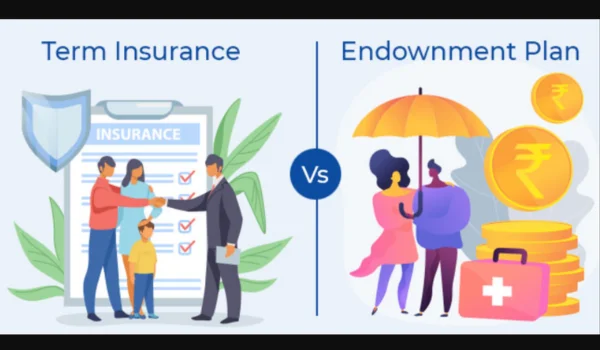
| Feature | Term Insurance | Endowment Plan |
| Life Cover | High | Moderate |
| Premium | Low | High |
| Maturity Benefit | Generally No | Yes |
| Savings Component | No | Yes |
| Investment Risk | None | Depends on policy type |
| Policy Objective | Family protection | Savings and protection |
| Returns | No investment return | Maturity value and possible bonuses |
Premium Comparison
For the same age and coverage amount:
- A term insurance plan usually has a much lower premium.
- An endowment plan generally costs more because part of the premium goes towards savings.
Benefits of Term Insurance
Affordable Premiums
You can get a high sum assured at a relatively low cost.
Higher Financial Protection
Suitable for protecting your family’s financial future in case of your absence.
Flexible Policy Term
Many insurers offer policy terms extending up to retirement age or beyond, subject to eligibility.
Optional Riders
You may be able to add:
- Critical illness rider
- Accidental death benefit rider
- Permanent disability rider
- Waiver of premium rider
Availability depends on the insurer.
Benefits of Endowment Plans
Maturity Benefit
If you survive the policy term, you receive a payout according to the policy conditions.
Savings Habit
Encourages disciplined long-term saving.
Life Insurance Coverage
Provides financial protection for your family during the policy term.
Bonus Benefits
Some participating endowment plans may declare bonuses, depending on the insurer’s performance and policy terms.
Who Should Buy Term Insurance?
Term insurance is generally suitable for:
- Salaried employees
- Young professionals
- Married individuals
- Parents
- Home loan borrowers
- Sole earning members
- People seeking high life cover at a lower cost
Who Should Buy an Endowment Plan?
An endowment plan may suit:
- Conservative investors
- Individuals seeking insurance with savings
- People who prefer guaranteed or relatively predictable maturity benefits
- Those comfortable paying higher premiums
Tax Benefits
Both term insurance and endowment plans may offer tax benefits, subject to the conditions and limits under the Income Tax Act in force at the time.
Tax rules may change, so always verify the latest provisions.
Factors to Consider Before Choosing
Choose Term Insurance If You:
- Need maximum life cover
- Have dependents
- Want affordable premiums
- Already invest separately for wealth creation
- Want financial security for your family
Choose an Endowment Plan If You:
- Prefer insurance with savings
- Want a maturity payout
- Can afford higher premiums
- Have long-term financial goals
Common Mistakes to Avoid
- Buying insurance only for tax benefits
- Choosing insufficient life cover
- Mixing insurance and investment without understanding the trade-offs
- Ignoring policy exclusions
- Not comparing plans from different insurers
- Delaying the purchase of life insurance
How to Choose the Right Plan
Before purchasing, consider:
- Your age
- Income
- Financial responsibilities
- Number of dependents
- Existing investments
- Long-term financial goals
- Budget for premiums
Frequently Asked Questions
Which is better: Term insurance or an endowment plan?
There is no universal answer. Term insurance is generally better for high financial protection at a lower cost, while an endowment plan is suitable for those who want insurance combined with savings.
Does term insurance provide a maturity benefit?
Most standard term insurance plans do not provide a maturity benefit. However, some insurers offer Return of Premium (TROP) plans that refund eligible premiums if the policyholder survives the policy term.
Why are endowment plans more expensive?
They combine life insurance with a savings component, which results in higher premiums than pure term insurance plans.
Can I buy both?
Yes. Many people use term insurance for financial protection and invest separately or choose other financial products for wealth creation. Some may also purchase an endowment plan if it aligns with their financial goals.
Which plan offers higher life cover?
For the same premium amount, term insurance generally provides significantly higher life cover than an endowment plan.
Term Insurance vs Endowment Plan at a Glance
| Factor | Term Insurance | Endowment Plan |
| Main Objective | Financial protection | Savings with insurance |
| Premium | Lower | Higher |
| Coverage | High | Lower |
| Maturity Benefit | Usually No | Yes |
| Wealth Creation | No | Limited savings component |
| Best For | Family protection | Long-term savings |
Conclusion
Both term insurance and endowment plans have their own advantages, but they are designed for different purposes. If your primary goal is to provide substantial financial protection for your family at an affordable cost, a term insurance plan is generally the more suitable option. If you prefer a policy that combines life insurance with disciplined long-term savings and a maturity benefit, an endowment plan may better match your needs. Before making a decision, compare policy features, premiums, exclusions, and claim settlement records, and choose a plan that aligns with your financial objectives and budget.