Health insurance helps protect you from the high costs of medical treatment. However, when you need to use your policy, one important decision is understanding how the claim payment process works.
Health insurance claims are mainly handled in two ways:
- Cashless Health Insurance Claim
- Reimbursement Health Insurance Claim
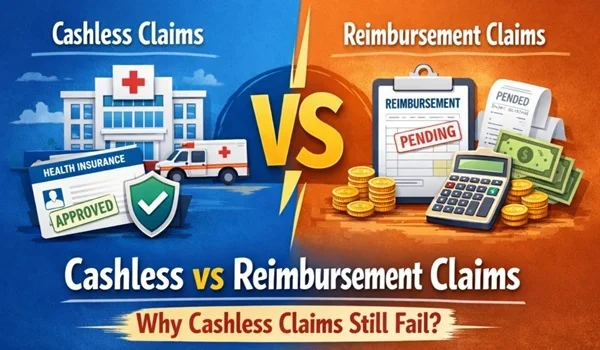
Both methods help policyholders pay medical expenses, but the process, payment method, and level of convenience are different.
Understanding the difference between cashless and reimbursement claims can help you choose the right health insurance plan and avoid confusion during medical emergencies.
What Is a Cashless Health Insurance Claim?
A cashless health insurance claim allows the policyholder to receive medical treatment at a network hospital without paying the entire hospital bill upfront.
The insurance company directly settles the approved amount with the hospital.
The policyholder may only need to pay:
- Deductibles (if applicable)
- Non-covered expenses
- Personal expenses not included in the policy
Example of Cashless Claim
Suppose you are hospitalized at a network hospital and your approved medical bill is $5,000.
If your health insurance covers the treatment, the insurer pays the approved amount directly to the hospital, and you pay only the expenses not covered by the policy.
How Does Cashless Health Insurance Work?
The cashless claim process usually follows these steps:
Step 1: Visit a Network Hospital
You need to choose a hospital that is included in your insurance company’s network.
Step 2: Show Your Insurance Details
Provide your:
- Health insurance card
- Policy details
- Identity documents
Step 3: Request Approval
The hospital sends a pre-authorization request to the insurance company.
Step 4: Receive Treatment
After approval, treatment begins without paying the full hospital bill.
Step 5: Final Settlement
The insurer settles the approved expenses directly with the hospital.
What Is a Reimbursement Health Insurance Claim?
A reimbursement claim requires the policyholder to pay the medical expenses first and then request repayment from the insurance company.
The insurer reviews the submitted documents and reimburses the eligible amount according to the policy terms.
Example of Reimbursement Claim
Suppose you receive treatment at a hospital that is not part of your insurer’s network and your medical bill is $3,000.
You pay the hospital yourself and later submit:
- Bills
- Medical reports
- Prescriptions
- Discharge summary
- Other required documents
After approval, the insurer reimburses the eligible amount.
How Does Reimbursement Health Insurance Work?
The process usually includes:
Step 1: Pay Medical Expenses
The policyholder pays the hospital bill directly.
Step 2: Collect Documents
Keep all important records, including:
- Hospital bills
- Doctor’s reports
- Medical test reports
- Payment receipts
Step 3: Submit Claim Request
Submit the claim form and required documents to the insurance company.
Step 4: Claim Verification
The insurer reviews the documents and checks policy coverage.
Step 5: Receive Payment
After approval, the insurer transfers the eligible claim amount.
Difference Between Cashless and Reimbursement Health Insurance
| Feature | Cashless Claim | Reimbursement Claim |
| Payment Method | Insurance company pays hospital directly | Policyholder pays first and gets repayment later |
| Upfront Payment | Usually lower | Higher because you pay the bill initially |
| Hospital Requirement | Treatment usually at network hospitals | Can be at network or non-network hospitals depending on policy terms |
| Claim Process | Managed with hospital support | Policyholder handles documentation |
| Emergency Convenience | More convenient | Requires arranging funds first |
| Documentation Work | Usually less | More paperwork required |
| Processing Time | Often faster | May take longer due to verification |
Advantages of Cashless Health Insurance
No Need to Arrange Large Amount of Money
During emergencies, arranging a large hospital payment can be difficult. Cashless facilities reduce this burden.
Faster Claim Experience
Since the hospital and insurer coordinate directly, the process can be smoother.
Less Documentation Work
The hospital generally helps with claim-related paperwork.
Useful During Medical Emergencies
Cashless facilities are especially helpful when immediate treatment is required.
Limitations of Cashless Health Insurance
Limited Hospital Choice
You may need to visit hospitals that are part of your insurer’s network.
Approval Is Required
The insurer must approve the treatment according to policy conditions.
Some Expenses May Not Be Covered
You may still need to pay:
- Non-medical expenses
- Policy exclusions
- Deductibles
Advantages of Reimbursement Health Insurance
More Hospital Flexibility
You may have the option to choose a hospital outside the insurer’s network, depending on your policy.
Useful When Cashless Facility Is Not Available
If a suitable network hospital is unavailable, reimbursement can provide another option.
Greater Choice of Healthcare Providers
Some people prefer specific doctors or hospitals that may not offer cashless services.
Limitations of Reimbursement Health Insurance
Requires Initial Payment
The biggest challenge is arranging money for treatment before receiving reimbursement.
More Documentation
You need to collect and submit multiple documents.
Processing May Take Longer
The insurer needs time to verify bills and medical records.
Cashless vs Reimbursement: Which One Is Better?
There is no single option that is best for everyone.
The right choice depends on your needs.
Cashless May Be Better If:
- You want convenience during emergencies
- You prefer less paperwork
- You want to avoid arranging large medical payments
- You live near network hospitals
Reimbursement May Be Better If:
- You want more hospital flexibility
- Your preferred hospital is not in the network
- You can manage initial expenses
- You prefer wider treatment options
Important Things to Check Before Buying Health Insurance
Before selecting a health insurance plan, check:
Network Hospitals
A large network of hospitals increases the chances of getting cashless treatment near you.
Claim Settlement Process
Understand how claims are handled and what documents are required.
Policy Exclusions
Know what treatments and expenses are not covered.
Waiting Periods
Some treatments may have waiting periods before coverage begins.
Sub-Limits and Deductibles
Understand restrictions that may reduce the claim amount.
Common Mistakes Policyholders Make
Not Checking Network Hospitals
Buying a policy without checking nearby network hospitals can create problems during emergencies.
Not Reading Policy Terms
Many people only focus on premium costs and ignore coverage details.
Losing Medical Documents
Bills and reports are important for both cashless and reimbursement claims.
Assuming Every Expense Is Covered
Insurance policies have limits and exclusions that must be understood.
Quick Comparison Example
| Situation | Better Option |
| Emergency hospitalization at a network hospital | Cashless claim |
| Planned treatment at a preferred non-network hospital | Reimbursement claim |
| Unable to arrange large hospital payment | Cashless claim |
| Want freedom to choose a hospital | Reimbursement claim |
Final Thoughts
Both cashless and reimbursement health insurance claims provide financial protection, but they work differently. A cashless claim offers convenience by allowing the insurer to pay the hospital directly, while a reimbursement claim gives more flexibility but requires the policyholder to pay first.
For most people, having a health insurance policy with a strong cashless hospital network is beneficial because medical emergencies require quick action. However, understanding reimbursement procedures is also important because it can provide support when cashless facilities are not available.
Before choosing a health insurance plan, always compare coverage, hospital network, claim process, exclusions, and policy terms—not just the premium amount.