Buying an insurance policy is an important financial decision, but many people do not read the policy document carefully because it looks complicated and full of technical terms.
However, understanding your insurance policy is essential. A policy document explains what is covered, what is not covered, how claims work, and what conditions you need to follow.
Reading your policy properly can help you avoid surprises during emergencies and increase your chances of a smooth claim process.
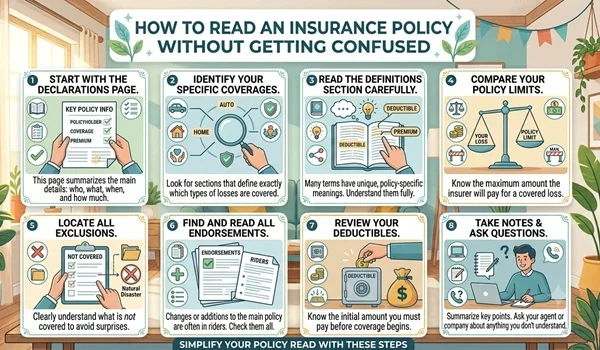
This simple guide explains how to read an insurance policy without confusion.
Why Is It Important to Read an Insurance Policy?
Many people only check:
- Premium amount
- Coverage amount
- Policy duration
But an insurance policy contains many other important details.
Reading the policy helps you understand:
- What benefits you will receive
- What situations are covered
- What expenses are excluded
- How to file a claim
- What responsibilities you have as a policyholder
A policy is a legal agreement between you and the insurance company, so understanding its terms is important.
Basic Structure of an Insurance Policy
Most insurance policies contain similar sections.
The main sections include:
- Policy details
- Coverage benefits
- Exclusions
- Terms and conditions
- Claim process
- Premium details
- Renewal information
Understanding these sections makes reading the document easier.
Step 1: Start With the Policy Summary
The policy summary provides a quick overview of your insurance plan.
Check important details such as:
- Policyholder name
- Policy number
- Type of insurance
- Coverage amount
- Policy start date
- Policy expiry date
- Premium amount
Make sure all personal information is correct.
Incorrect details can create problems during claim settlement.
Step 2: Understand What Your Policy Covers
The coverage section explains the benefits included in your insurance plan.
For example, a health insurance policy may cover:
- Hospitalization expenses
- Surgery costs
- Medical treatments
- Emergency care
A vehicle insurance policy may cover:
- Accident damage
- Theft
- Third-party liability
A life insurance policy may provide:
- Death benefit
- Additional riders (if selected)
Always check exactly what protection you are paying for.
Step 3: Read the Sum Insured or Coverage Amount
The sum insured is the maximum amount the insurance company will pay according to the policy terms.
For example:
If your health insurance coverage is $50,000, the insurer may pay eligible medical expenses up to that limit.
Check:
- Total coverage amount
- Individual limits
- Sub-limits
- Deductibles
A higher coverage amount does not always mean better protection if important conditions are missing.
Step 4: Pay Special Attention to Exclusions
Exclusions are situations where the insurance company will not provide coverage.
This is one of the most important sections of any policy.
Common exclusions may include:
- Certain diseases
- Specific treatments
- Intentional damage
- Illegal activities
- Policy violations
Many claim rejections happen because policyholders do not understand exclusions.
Always read this section carefully.
Step 5: Understand Waiting Periods
Some insurance benefits may not be available immediately after buying the policy.
Waiting periods may apply to:
- Pre-existing diseases
- Specific treatments
- Maternity benefits
- Certain medical conditions
Check:
- Duration of waiting period
- Conditions covered under waiting period
- When benefits become available
Step 6: Check Claim Rules and Procedures
The claim section explains how you can request payment from the insurer.
Look for information about:
- How to inform the insurer
- Required documents
- Claim submission process
- Claim timelines
- Contact details
Knowing the claim process beforehand can save time during emergencies.
Step 7: Understand Premium and Payment Terms
The premium section explains how much you need to pay and when.
Check:
- Premium amount
- Payment frequency
- Due dates
- Late payment rules
- Renewal charges
Missing premium payments can affect your coverage.
Step 8: Check Deductibles and Co-Payments
Some policies require the policyholder to pay a portion of expenses.
Important terms include:
Deductible
A deductible is an amount you must pay before the insurer starts paying eligible expenses.
Co-Payment
A co-payment means you pay a fixed percentage of the claim amount.
Example:
If your policy has a 10% co-payment and an eligible claim is $10,000, you may need to pay $1,000 while the insurer pays the remaining amount according to policy terms.
Step 9: Understand Riders and Additional Benefits
Riders are extra benefits that can be added to a basic insurance policy.
Examples include:
- Critical illness cover
- Accident cover
- Personal accident benefit
- Maternity cover
Check:
- Which riders you have selected
- Additional premium paid
- Conditions for using these benefits
Step 10: Read Renewal and Cancellation Rules
Insurance policies usually have specific renewal and cancellation conditions.
Check:
- Renewal date
- Grace period
- Cancellation process
- Refund conditions (if applicable)
Keeping your policy active is important for continuous protection.
Important Insurance Terms You Should Know
| Term | Simple Meaning |
| Premium | Amount paid to keep the insurance active |
| Policyholder | Person who owns the insurance policy |
| Insured | Person or asset protected by insurance |
| Sum insured | Maximum coverage amount |
| Claim | Request made to receive insurance benefits |
| Exclusion | Situation not covered by insurance |
| Waiting period | Time before certain benefits become available |
| Deductible | Amount paid by the policyholder before coverage applies |
| Renewal | Extending the policy after expiry |
| Rider | Additional benefit added to the policy |
Common Mistakes People Make While Reading Insurance Policies
Only Checking the Premium
A cheaper policy may have:
- Lower coverage
- More exclusions
- Higher restrictions
Always compare benefits, not just price.
Ignoring Exclusions
Many people read what is covered but skip what is not covered.
Exclusions are equally important.
Not Understanding Technical Terms
If any term is unclear, ask the insurer or advisor before purchasing.
Not Checking Claim Conditions
A policy may look attractive, but difficult claim procedures can create problems later.
Keeping Old Information in the Policy
Update details such as:
- Address
- Contact number
- Nominee information
when required.
Simple Checklist Before Buying Any Insurance Policy
Before signing a policy, check:
✓ What does the policy cover?
✓ What is not covered?
✓ How much coverage do I get?
✓ What are the waiting periods?
✓ What documents are needed for claims?
✓ Are there any deductibles or co-payments?
✓ When does the policy expire?
✓ Are the personal details correct?
Tips to Make Insurance Documents Easier to Understand
Read Section by Section
Do not try to understand the entire document at once.
Start with:
- Coverage
- Exclusions
- Claim process
- Terms and conditions
Highlight Important Points
Mark important details like:
- Claim rules
- Renewal dates
- Exclusions
- Waiting periods
Keep a Digital Copy
Store your policy document safely so you can access it when needed.
Ask Questions Before Buying
Never hesitate to ask the insurance company about unclear terms.
Final Thoughts
An insurance policy may look complicated, but understanding the important sections makes it much easier to read. Focus on coverage, exclusions, waiting periods, claim procedures, and payment conditions.
A well-understood insurance policy provides better financial protection because you know exactly what benefits you can expect and what responsibilities you need to follow.
Taking time to read your policy today can help you avoid confusion and problems during future emergencies.