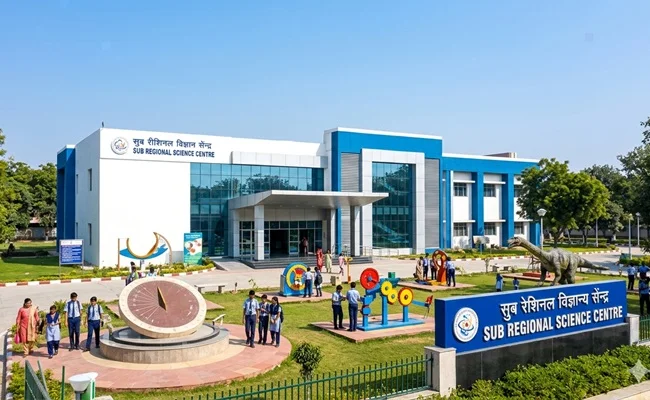
Science becomes much more exciting when you can touch, experiment, and interact with it. The Sub Regional Science Centre is a wonderful place where learning meets fun, making science easy to understand for visitors of all ages. Whether you are a student, parent, teacher, or curious traveler, this science center offers an engaging experience through interactive exhibits, scientific demonstrations, and educational displays.
The center provides visitors with opportunities to learn about physics, biology, astronomy, technology, mathematics, and environmental science through practical demonstrations.
History and Importance
Sub Regional Science Centres were established to bring science education closer to people living in smaller cities and towns. Their main objective is to develop scientific thinking and make learning more interactive.
These centers play an important role in inspiring students to explore science and technology while helping visitors understand how scientific concepts affect everyday life.
Today, they serve as educational hubs that combine entertainment with knowledge.
Location and Address
Address:
The exact address varies depending on the city where the Sub Regional Science Centre is located.
Visitors should check the official details of the specific Sub Regional Science Centre they plan to visit before traveling.
How to Reach Sub Regional Science Centre
By Air
The nearest airport depends on the location of the particular science center.
By Train
Most Sub Regional Science Centres are located within easy reach of major railway stations in their respective cities.
By Road
Visitors can reach the center by local buses, taxis, auto-rickshaws, or private vehicles.
Google Maps Location
Sub Regional Science Centre Timing
| Day | Timing |
| Tuesday to Sunday | 10:00 AM – 5:30 PM |
Closed: Monday and selected public holidays.
Timing may vary slightly depending on the center.
Sub Regional Science Centre Ticket Price
| Visitor Type | Ticket Price (Approx.) |
| Adults | ₹20 – ₹50 |
| Children | ₹10 – ₹30 |
| School Groups | Special concessions may apply |
Ticket prices may vary by location.
What to See Inside Sub Regional Science Centre
Interactive Science Exhibits
Hands-on exhibits allow visitors to perform experiments and understand scientific principles.
Physics Gallery
Explore concepts related to motion, force, light, sound, and energy.
Biology and Life Science Displays
Learn about the human body, plants, animals, and ecosystems.
Mathematics Section
Discover mathematical puzzles, games, and problem-solving activities.
Technology and Innovation Exhibits
See displays related to modern technology and engineering.
Science Demonstration Shows
Many centers organize live science demonstrations and educational programs.
Outdoor Science Park
Some science centers feature outdoor exhibits that explain scientific concepts through interactive installations.
Visitor Experience
Visitors often find the science center both educational and entertaining. Children enjoy experimenting with interactive exhibits, while adults appreciate the practical explanations of scientific concepts.
The center is especially popular among school groups because it makes learning science enjoyable and engaging.
Facilities Available
The science center generally provides:
- Parking facility
- Restrooms
- Drinking water
- Seating areas
- Educational galleries
- Science demonstration halls
- Wheelchair accessibility
- Garden and outdoor exhibits
- Group visit facilities
Best Time to Visit Sub Regional Science Centre
The best time to visit is throughout the year since most exhibits are indoors.
Winter (October–March)
- Pleasant weather
- Ideal for combining with local sightseeing
Summer (April–June)
- Comfortable indoor experience
- Popular among students during vacations
Monsoon (July–September)
- Good indoor attraction during rainy days
Nearby Places to Visit
Nearby attractions depend on the city where the science center is located. Common nearby attractions may include:
- Museums
- Parks and gardens
- Planetariums
- Historical monuments
- Educational institutions
- Local cultural centers
Pros and Cons
Pros
✔ Educational and informative
✔ Interactive learning experience
✔ Suitable for students and families
✔ Affordable ticket price
✔ Encourages scientific thinking
✔ Indoor attraction for all seasons
Cons
✘ Limited entertainment for visitors seeking adventure activities
✘ Some exhibits may require reading and observation
✘ Facilities and exhibit quality vary by location
✘ Can be crowded during school excursions
Conclusion
The Sub Regional Science Centre is an excellent destination for anyone interested in science, technology, and learning through experience. Its interactive exhibits, educational programs, and hands-on activities make it one of the best places for students and families. Whether you want to explore scientific concepts, enjoy educational demonstrations, or simply spend a productive day with children, the science center offers a rewarding experience. Before visiting, check the latest timing, ticket price information, and plan your trip during the best time to visit for the most enjoyable experience.
Frequently Asked Questions (FAQs)
Q: What is the timing of Sub Regional Science Centre?
A: Most centers are open from 10:00 AM to 5:30 PM, Tuesday to Sunday.
Q: What is the ticket price of Sub Regional Science Centre?
A: The ticket price generally ranges from ₹20 to ₹50 for adults and ₹10 to ₹30 for children.
Q: What is the best time to visit Sub Regional Science Centre?
A: The center can be visited throughout the year, with October to March being particularly comfortable.
Q: How much time is needed to explore the science center?
A: Most visitors spend around 2–3 hours exploring the exhibits.
Q: Is the science center suitable for children?
A: Yes, it is one of the best educational attractions for children and students.
Q: Are science demonstrations available?
A: Many science centers organize live demonstrations and educational programs.
Q: Is photography allowed inside the science center?
A: Photography policies vary by location. Visitors should follow the center’s guidelines.