Running a small business comes with many expenses, from rent and utilities to employee salaries and marketing costs. While reducing operating costs is important for improving profits, cutting corners can affect product quality, customer satisfaction, and business reputation.
The good news is that small businesses can lower expenses by improving efficiency rather than sacrificing quality. Smart planning, better resource management, and the right technology can help reduce costs while maintaining high standards.
Why Managing Operating Costs Is Important
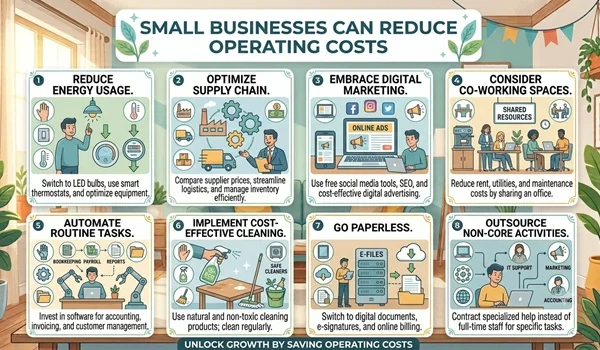
Lower operating costs can provide several benefits, including:
- Higher profit margins
- Better cash flow
- Increased business stability
- More funds for business growth
- Competitive pricing
- Greater financial flexibility during slow periods
The goal is to eliminate unnecessary expenses while continuing to deliver quality products and services.
Review Your Business Expenses Regularly
Many businesses continue paying for services or subscriptions they no longer use.
Review your monthly expenses and identify:
- Unused software subscriptions
- Duplicate services
- High utility bills
- Unnecessary office supplies
- Expensive vendor contracts
Regular expense reviews help you spot areas where money can be saved without affecting daily operations.
Automate Repetitive Tasks
Automation reduces manual work, saves time, and minimizes errors.
Consider automating:
- Invoice generation
- Payroll processing
- Inventory tracking
- Customer follow-up emails
- Appointment scheduling
- Expense management
Automation allows employees to focus on higher-value tasks instead of repetitive administrative work.
Negotiate With Suppliers
Many business owners accept supplier prices without negotiation.
You may be able to reduce costs by:
- Requesting bulk purchase discounts
- Signing long-term agreements
- Comparing multiple suppliers
- Negotiating better payment terms
- Asking for seasonal offers
Even small discounts can result in significant savings over time.
Improve Inventory Management
Poor inventory management often leads to unnecessary expenses.
To reduce costs:
- Monitor stock levels regularly
- Avoid overstocking
- Identify slow-moving products
- Use inventory management software
- Forecast demand based on sales trends
Efficient inventory management helps reduce storage costs and minimizes product waste.
Reduce Energy Consumption
Utility bills are a recurring expense for most businesses.
Simple ways to lower energy costs include:
- Switching to LED lighting
- Turning off unused equipment
- Using energy-efficient appliances
- Maintaining air conditioning systems
- Encouraging employees to save electricity
Lower energy usage reduces expenses without affecting product or service quality.
Outsource Non-Core Activities
Hiring full-time employees for every function may not always be cost-effective.
Businesses can outsource tasks such as:
- Accounting
- Payroll
- Graphic design
- IT support
- Content writing
- Digital marketing
Outsourcing allows businesses to access skilled professionals while controlling labor costs.
Use Digital Marketing Instead of Traditional Advertising
Digital marketing often provides better value than expensive offline advertising.
Cost-effective options include:
- Search engine optimization (SEO)
- Social media marketing
- Email marketing
- Content marketing
- Local business listings
- Referral programs
These methods can generate quality leads while keeping marketing expenses under control.
Encourage Remote or Hybrid Work
If your business allows it, remote or hybrid work can reduce overhead costs.
Potential savings include:
- Office rent
- Electricity
- Office maintenance
- Furniture expenses
- Travel reimbursements
At the same time, employees may benefit from greater flexibility and productivity.
Invest in Employee Training
Well-trained employees work more efficiently and make fewer mistakes.
Training can help improve:
- Customer service
- Productivity
- Product knowledge
- Workplace safety
- Communication skills
Although training requires an initial investment, it often reduces long-term operating costs by improving efficiency.
Focus on Customer Retention
Keeping existing customers is generally more cost-effective than acquiring new ones.
Improve customer retention by:
- Providing excellent service
- Responding quickly to complaints
- Offering loyalty rewards
- Personalizing customer interactions
- Maintaining consistent product quality
Satisfied customers are more likely to return and recommend your business to others.
Optimize Business Processes
Review your daily operations to identify unnecessary steps.
Questions to ask include:
- Can this process be completed faster?
- Is there unnecessary paperwork?
- Can two steps be combined?
- Is there a better software solution?
- Are employees spending time on low-value tasks?
Small process improvements can lead to significant cost savings over time.
Reduce Waste
Waste increases operating costs without adding value.
Examples include:
- Excess packaging
- Material waste
- Food waste
- Printing unnecessary documents
- Poor production planning
Implementing waste reduction practices can improve both profitability and sustainability.
Use Cloud-Based Software
Cloud solutions often reduce hardware and maintenance expenses.
Benefits include:
- Lower IT costs
- Automatic software updates
- Secure data storage
- Easy collaboration
- Access from multiple locations
Many cloud-based tools offer affordable plans designed for small businesses.
Monitor Key Performance Indicators (KPIs)
Tracking business performance helps identify areas where costs can be controlled.
Useful KPIs include:
- Operating expenses
- Profit margin
- Customer acquisition cost
- Inventory turnover
- Employee productivity
- Customer retention rate
Regular monitoring allows business owners to make informed financial decisions.
Build Strong Vendor Relationships
Reliable suppliers often reward long-term customers with better pricing and service.
Good relationships may provide:
- Priority deliveries
- Flexible payment terms
- Better discounts
- Early access to new products
- Improved support during supply shortages
Maintaining trusted partnerships can reduce unexpected business expenses.
Avoid Unnecessary Debt
Borrowing can help businesses grow, but excessive debt increases interest costs.
Before taking a loan:
- Compare lenders
- Calculate repayment capacity
- Borrow only what is necessary
- Use funds for productive investments
Managing debt wisely helps keep operating costs under control.
Use Data to Make Better Decisions
Instead of relying on assumptions, use business data to guide spending decisions.
Analyze:
- Best-selling products
- Seasonal sales trends
- Customer buying behavior
- Marketing performance
- Operational expenses
Data-driven decisions help eliminate ineffective spending and improve profitability.
Common Cost-Cutting Mistakes to Avoid
Some cost-cutting measures can harm the business in the long run.
Avoid these mistakes:
- Buying low-quality materials
- Reducing customer service standards
- Ignoring employee training
- Delaying essential maintenance
- Cutting marketing completely
- Hiring unqualified staff simply to save money
Reducing quality often leads to customer dissatisfaction and higher costs later.
Practical Cost Reduction Checklist
| Strategy | Potential Benefit |
| Review monthly expenses | Eliminates unnecessary spending |
| Automate routine tasks | Saves time and labor costs |
| Negotiate with suppliers | Lowers purchasing expenses |
| Improve inventory management | Reduces waste and storage costs |
| Reduce energy usage | Lowers utility bills |
| Outsource specialized work | Controls staffing expenses |
| Use digital marketing | Reduces advertising costs |
| Train employees | Improves productivity and quality |
| Track KPIs | Identifies areas for improvement |
| Focus on customer retention | Increases repeat business and revenue |
Final Thoughts
Reducing operating costs does not have to mean lowering product quality or customer service. By improving efficiency, adopting technology, managing resources carefully, and making informed financial decisions, small businesses can control expenses while continuing to deliver value to customers. Sustainable cost management helps strengthen profitability, supports long-term growth, and builds a resilient business that can adapt to changing market conditions.